
Guide

How to Ask a Client for Payment (Politely), With Templates

By i-quote team6 min read

Short answer

Ask early, ask clearly and make paying easy. Send a friendly note a few days before the due date, a short reminder on the day, then follow-ups 1, 7 and 14 days late that get firmer but stay polite. Every message should give the invoice number, amount and due date, and a one-click way to pay.
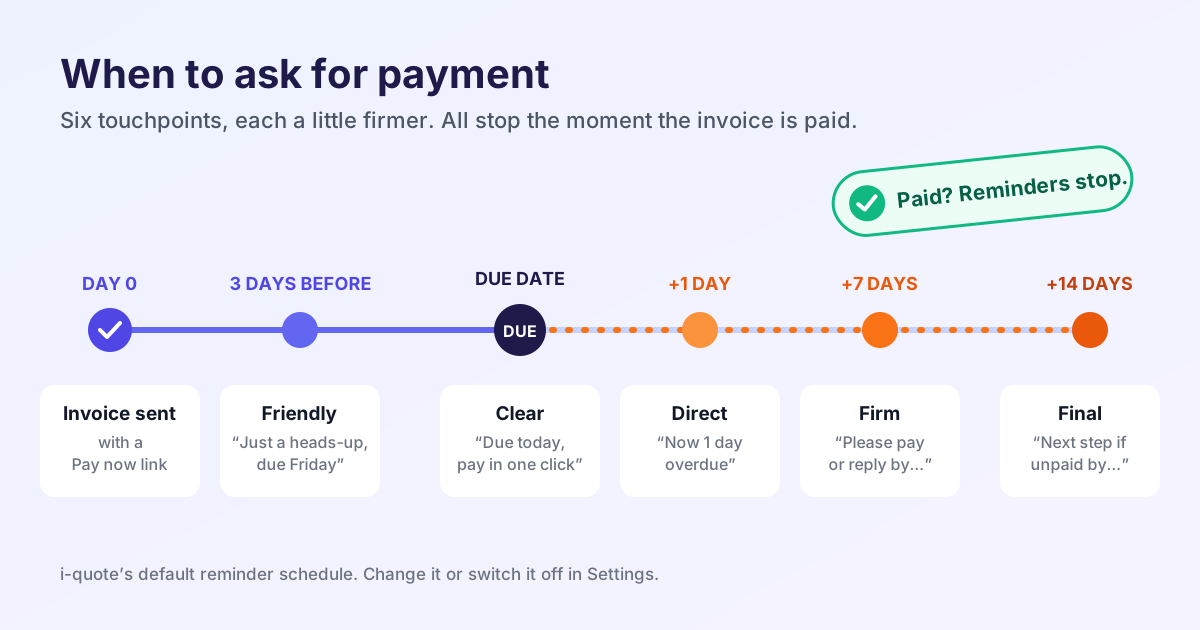
Timeline of payment reminders: invoice sent on day 0, a friendly note 3 days before the due date, a clear reminder on the due date, then direct, firm and final reminders 1, 7 and 14 days late. All reminders stop once the invoice is paid.

Asking for money you have already earned should not feel awkward, but for most small business owners it does. The good news is that most late invoices are not refusals. The client missed the email, forgot, or is waiting on someone else to approve it. A clear, well-timed reminder fixes most of them.

Below is when to ask, what to say, and copy-and-paste templates for every stage, from the friendly heads-up to the final notice, plus a short version for text and WhatsApp.
Is it rude to ask a client for payment?

No. You agreed on a price and a due date, and you delivered. Reminding someone of that agreement is ordinary business, and most clients would rather be reminded than discover an overdue bill later. What makes a reminder feel rude is the tone, not the act of asking.

Keep the message short, factual and friendly, assume good faith, and give the client an easy way to pay or to tell you about a problem.

What should every payment request include?

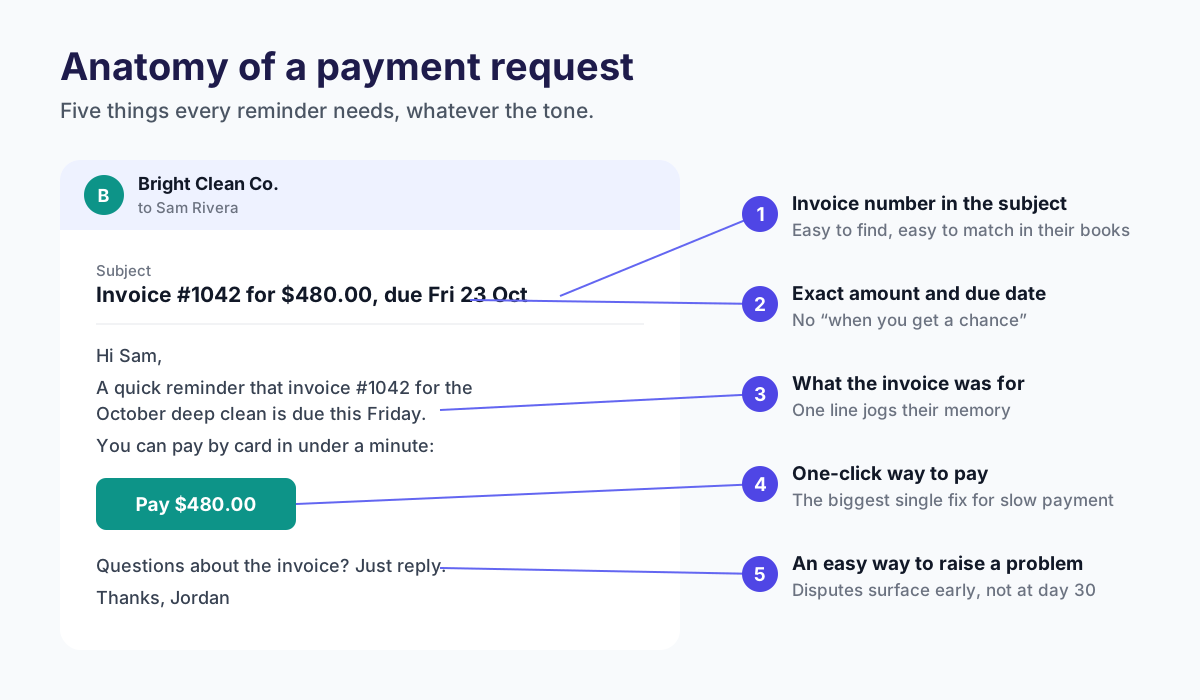
  • The invoice number, ideally in the subject line
  • The exact amount due and the due date
  • One line on what the invoice was for, such as "October deep clean"
  • A one-click way to pay, such as a card payment link
  • An easy way to raise a question or problem: "just reply to this email"
A sample reminder email from a cleaning business, with callouts: invoice number in the subject, the exact amount and due date, what the invoice was for, a Pay button, and an invitation to reply with questions.
A reminder that gets paid: specific, short, and one click from done.

Template 1: a friendly reminder before the due date

Send this about three days before the due date. It is a courtesy, not a chase.

Email · 3 days before the due date

Subject: Invoice #[number] for [amount], due [date] Hi [name], A quick heads-up that invoice #[number] for [work] is due on [date]. You can pay by card here: [payment link] If anything on the invoice needs a second look, just reply to this email. Thanks, [your name]

Template 2: on the due date

Email · due date

Subject: Invoice #[number] is due today Hi [name], Just a reminder that invoice #[number] for [amount] is due today. Paying takes about a minute: [payment link] Thank you, [your name]

Template 3: when the invoice is a week overdue

Be direct and ask a question. A question gets a reply, even if the reply is "next Tuesday".

Email · 7 days late

Subject: Invoice #[number] is now 7 days overdue Hi [name], Invoice #[number] for [amount] was due on [date] and is now a week overdue. Could you pay it here: [payment link], or let me know when I can expect payment? If there is an issue with the invoice, tell me and I will sort it out. Thanks, [your name]

Template 4: the final notice

State the next step and a date. Only mention a step you will actually take, and only fees or interest that your written terms already allow.

Email · 14+ days late

Subject: Final reminder: invoice #[number], [amount] Hi [name], Invoice #[number] for [amount] is now [X] days overdue, and I have not been able to reach you about it. Please pay by [date] here: [payment link]. If it is still unpaid by then, I will [pause further work / apply the late fee in our agreed terms / take the next step]. I would much rather settle this between us, so please reply if something is holding it up. Regards, [your name]

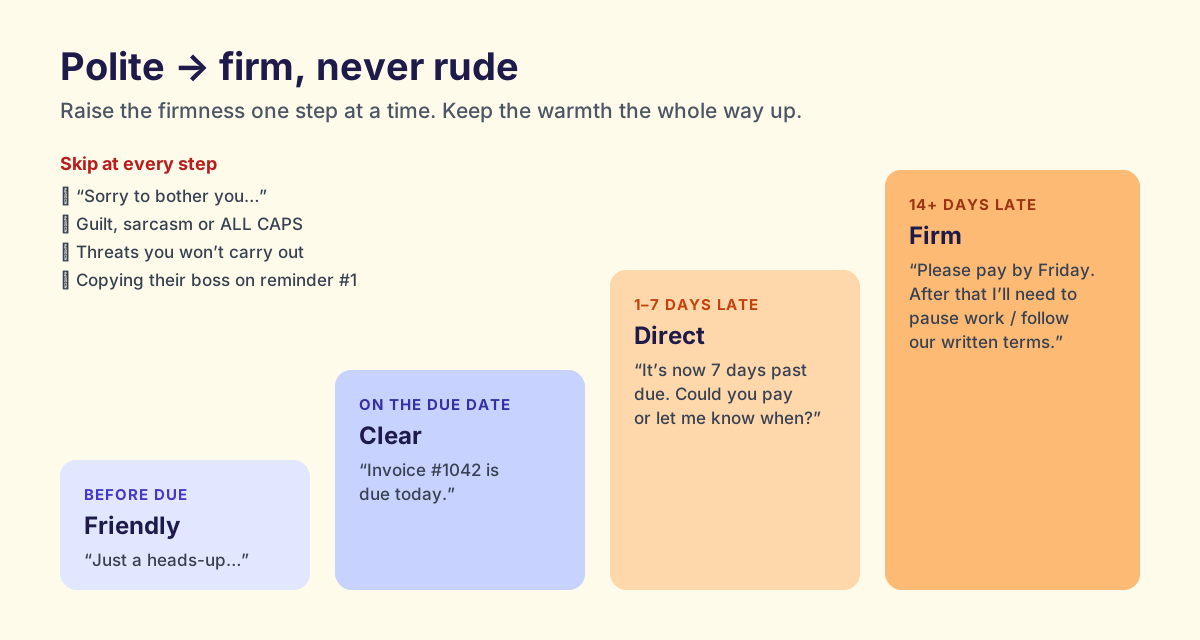
A rising staircase of reminder tones: friendly before the due date, clear on the due date, direct 1 to 7 days late and firm 14 or more days late, with a list of things to skip: apologising, guilt or sarcasm, empty threats and copying the client's boss on the first reminder.
Raise the firmness one step at a time; keep the warmth all the way up.

How to ask for payment by text or WhatsApp

For clients you usually message, a text is often read faster than an email. Keep it even shorter, and send the payment link rather than bank details in the chat.

Text / WhatsApp

Hi [name], it's [your name] from [business]. Friendly reminder that invoice #[number] for [amount] was due [date]. You can pay by card here: [payment link]. Thanks!

How to ask a client for a deposit or payment upfront

The easiest late payment to avoid is the one you collect before the work starts. For larger jobs, or new clients, ask for part of the price upfront and put it in the quote, so the client agrees to it at the same time as the price.

Say it plainly: "To book the job, a [25]% deposit of [amount] is due when you accept this quote. The balance is due on completion." In i-quote, a quote can ask for a deposit when the client accepts it, and the client pays it by card from the invoice page.

Let the reminders send themselves

Templates help, but the hard part of chasing payment is remembering to do it, on time, every time, for every client. That is the part worth automating.

i-quote emails each reminder on the schedule above in your business's name, with your logo and colour and a Pay button that takes the client straight to card payment through Stripe. Payments go to your own Stripe account. Reminders stop as soon as the invoice is paid, never go out more than once a day, and the invoice is marked overdue automatically. You can change the schedule or switch reminders off in Settings.

Frequently asked questions

How many times should you remind a client to pay?
A common pattern is one courtesy note before the due date, one on the due date, and two or three follow-ups after it, spaced further apart each time. If a client has not replied after the final reminder, switch to a phone call.
How do you politely ask for payment that is overdue?
State the facts (invoice number, amount, original due date), ask a direct question such as "could you let me know when I can expect payment?", include a payment link, and offer to fix any problem with the invoice. Leave out apologies and guilt.
Can I add a late fee to an overdue invoice?
Only if your client agreed to it in advance, usually in your quote, contract or payment terms, and only within the limits that apply where you and your client are based. Rules differ by state and country, so check your local rules before adding one.
What should I do if a client still will not pay?
Call them, pause any further work, and send a formal written demand with a final date. If that fails, options include a collection agency or a small claims court. The process and limits depend on where you are, so check your local rules or ask a professional.
Is email or text better for payment reminders?
Email keeps a written record and works well for businesses; a text is often seen faster by individual clients. Many owners use email for the formal reminders and a short text as a nudge, always with the same payment link.